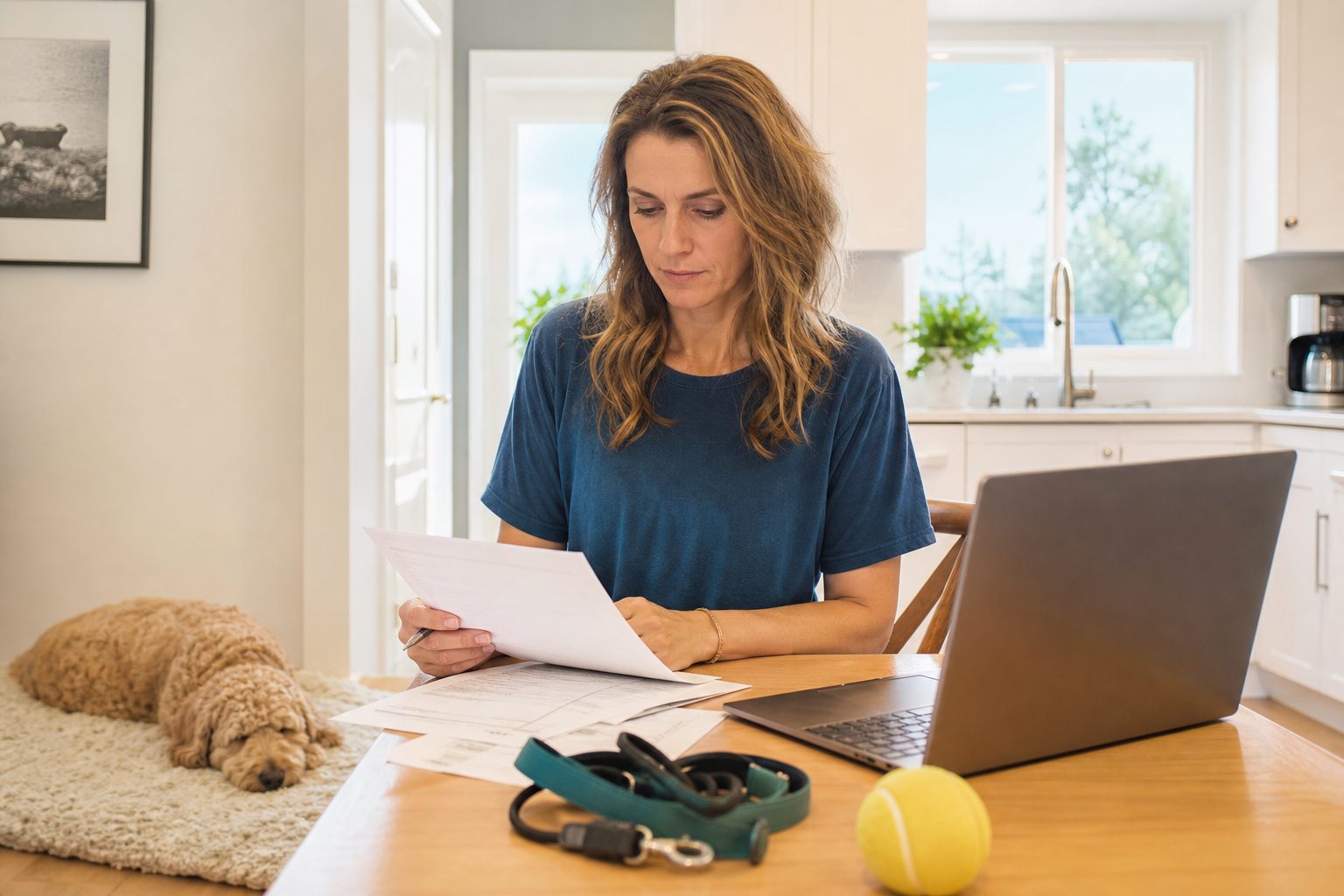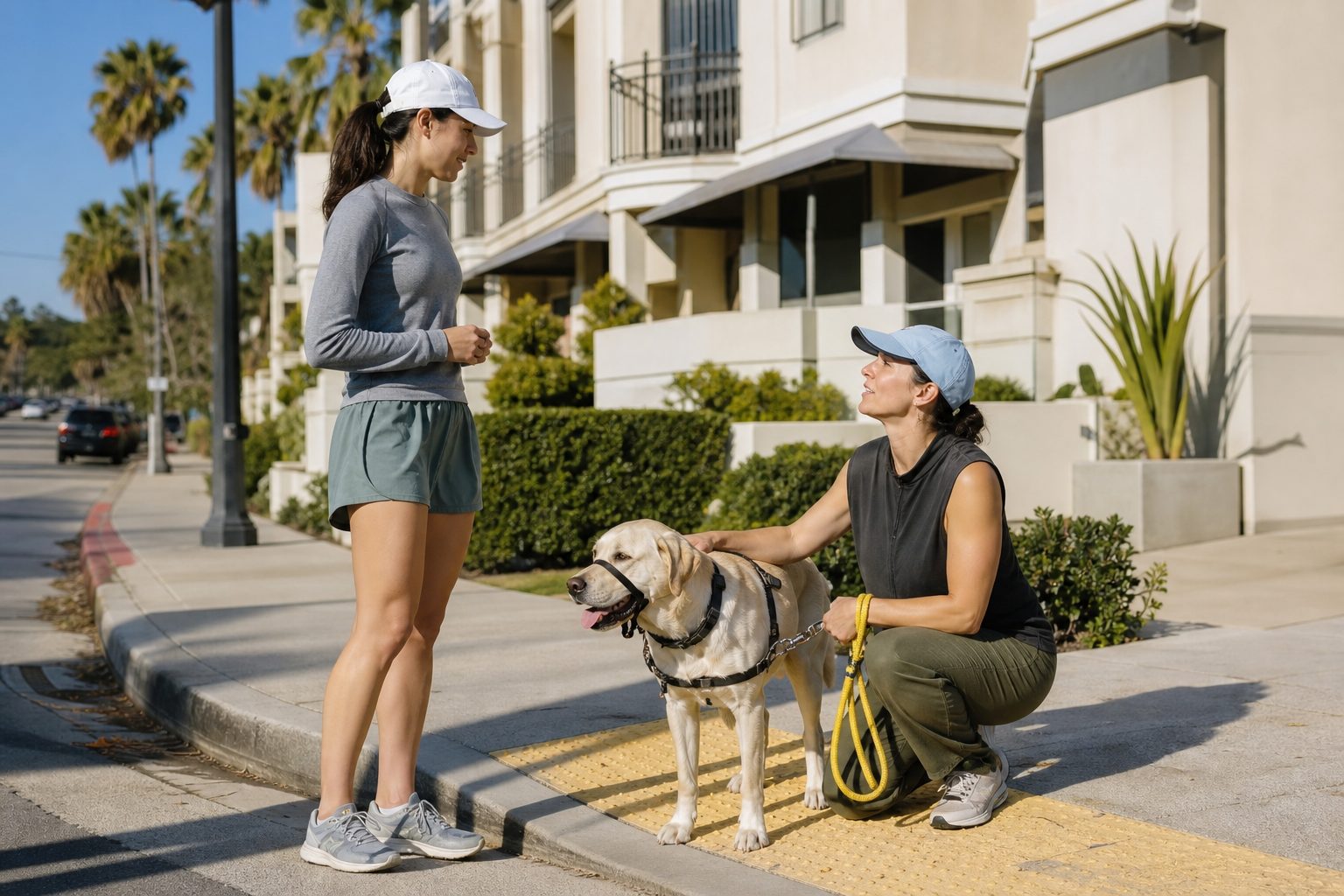
The doorway: how dogs get out during the pickup and the drop off
Most escapes start at the client's front door. A walker's arms are full, the leash isn't clipped yet, and the dog is already excited. The moment the door swings open, a determined dog can bolt between legs and out into the street or yard. These near-misses become real emergencies when traffic, other dogs, or distractions come into play.
At drop off, fatigue and routine can make walkers careless. Maybe the leash comes off before the door fully closes, or the walker assumes the fenced yard gate is latched. Even a quick goodbye at the threshold can give a dog enough time to squeeze past. The safest habit is to keep every leash clipped until the dog is secured by a closed door or gate, and to use your own body as a barrier whenever any door is open.
Client routines and unpredictable visitors
Clients sometimes set up routines that work fine when they're home, but not for service visits. A door left unlocked or a garage entry can change the usual route. Unexpected visitors, repair techs, delivery drivers, even a neighbor, can open a door without warning. Walkers need to pause, listen, and verify which doors are in use before moving any dog. If someone else is present, communicate about who handles the door and when.
Keep reading: W-2 or 1099: Classifying Dog Walkers Under the ABC Test
Retractable leashes and why working walkers leave them in the drawer
Retractable leashes might seem convenient for giving a dog more room to sniff or roam, but in practice, they introduce major safety risks. The thin cord can snap under sudden force. Walkers have little control at the full extension and cannot reel a dog in fast enough if it bolts or a hazard appears, like a squirrel or a loose dog nearby.
Many professional walkers keep retractable leashes out of use. The mechanisms can jam or fail at the worst moment. The handles are bulky and awkward, making it harder to grab the leash if a dog surges. For teams walking more than one dog, tangled cords are a constant hazard. Standard six-foot leashes offer better control and allow handlers to react quickly in tight spaces or at busy intersections.
Collar fit, martingales, and the two finger check
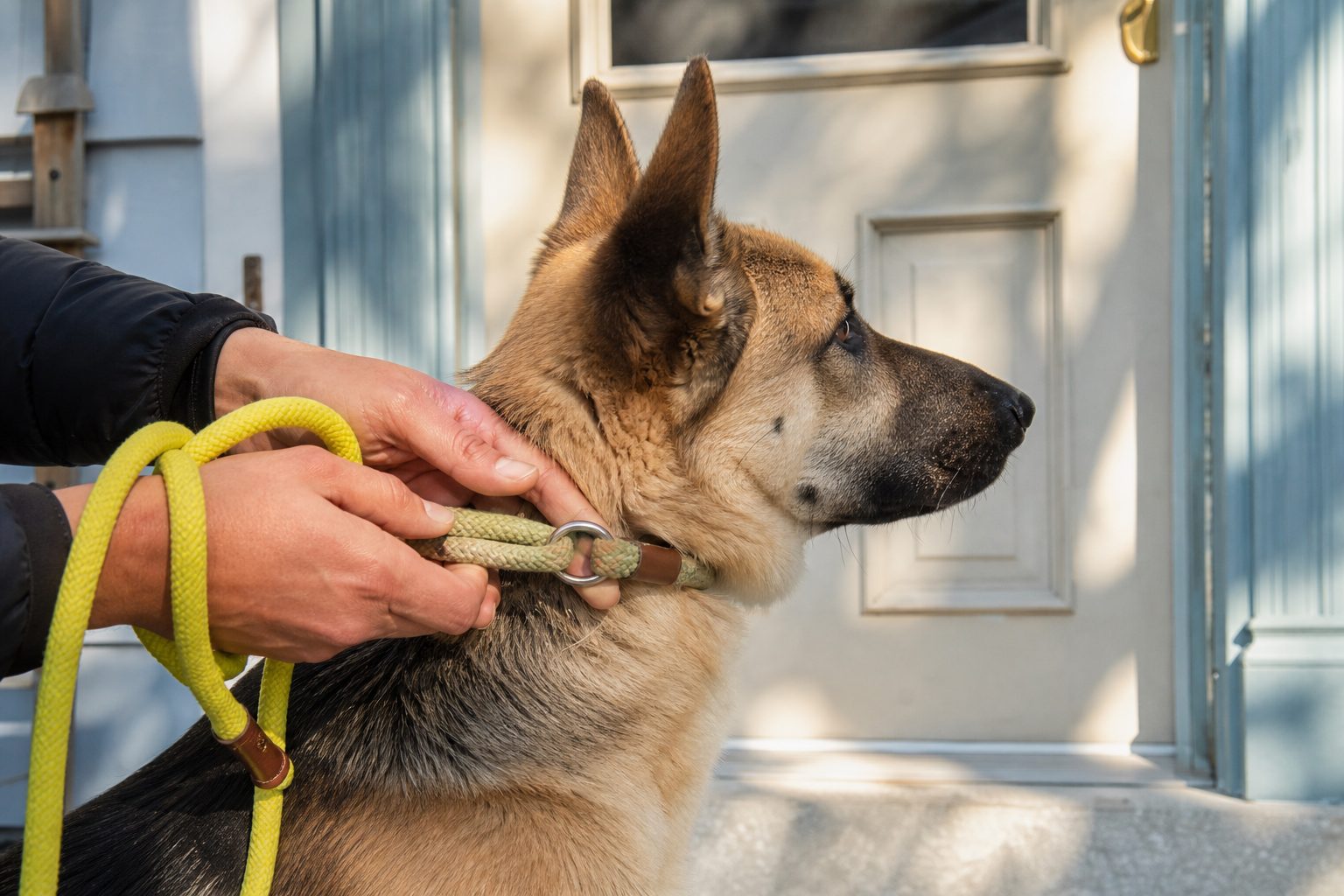
A loose collar is a common cause of escape. Many dogs can slip out of a flat collar if it is not fitted properly, especially in stressful or exciting situations. The basic rule is that you should be able to fit two fingers snugly under the collar. Any more space makes it too easy for the collar to slide over the dog's head.
Martingale collars offer an extra layer of security. These collars tighten slightly when a dog pulls, preventing escape while still being comfortable for the dog. For dogs with narrow heads or a talent for backing up out of gear, a martingale is often the safest option. However, even these need regular checks for fit and wear.
Growing dogs and long-haired breeds
Puppies grow quickly, and collars that fit last month may now be too tight or too loose. Long-haired breeds can hide a loose fit under their coat, so it is important to check every time. Some walkers carry a measuring tape or keep notes in their scheduling app to remind themselves when to check again, especially on recurring visits.
Keep reading: What Happens After a Dog Bites Someone on Your Walk
Harnesses a determined dog can back straight out of
Not all harnesses are escape-proof. Standard step-in or over-the-head harnesses without a secondary strap can be slipped by a dog that backs up quickly. If the harness loosens under strain or is not adjusted tightly, it can slide right off. Some dogs learn this trick after only one slip, especially when startled by a car or another animal.
Double-clip harnesses, with a belly strap that cinches behind the ribcage, offer more security. Walkers should check that all straps are snug and the harness sits high enough on the chest to prevent backward escape. Some professionals use harnesses with a rear connection for strength and a front connection for guidance, clipping both when walking powerful or unpredictable dogs.
Routine gear checks
Harnesses wear out like any other equipment. Plastic buckles can crack in the cold, webbing frays, and sliders can lose tension. It is good practice to tug firmly on all fastenings at least once a week, and to replace harnesses that show any sign of stretching or breakage. If a harness seems loose or easy to manipulate, switch it out before the next walk.
Clipping to the wrong ring and trusting a worn snap or stitched loop
In a hurry, it is easy to clip the leash to a tag ring, not the main D-ring. Tag rings are not designed to hold force and can snap under tension, sending a dog off with no restraint. Always verify the leash is attached to the hardware meant for walking.
Leash snaps, carabiners, and stitched loops take daily abuse. Metal can wear thin, springs can rust or stick, and fabric loops can unravel. Even if a leash looks intact, a weak point may fail under a sudden lunge. Many working walkers rotate leashes and inspect hardware at the start of every shift, looking for cracks, frayed stitching, or loose rivets.
Quick-release gear and client-supplied leashes
Some leashes come with quick-release buckles for convenience, but these can open by accident if bumped or pressed. When using a client-supplied leash, check all hardware before each walk. If a leash or collar looks unsafe, communicate with the client and bring a backup whenever possible.
See how LeashReport handles this for pet services
Dropping the leash: coffee stops, mail keys, and phone use
Dogs escape not just from faulty gear, but from moments of inattention. Setting the leash down to grab a coffee, unlock a mailbox, or answer a phone call creates an instant opportunity for a dog to bolt. Even the best-trained walker can be tempted to multitask, especially on a routine route with a familiar dog.
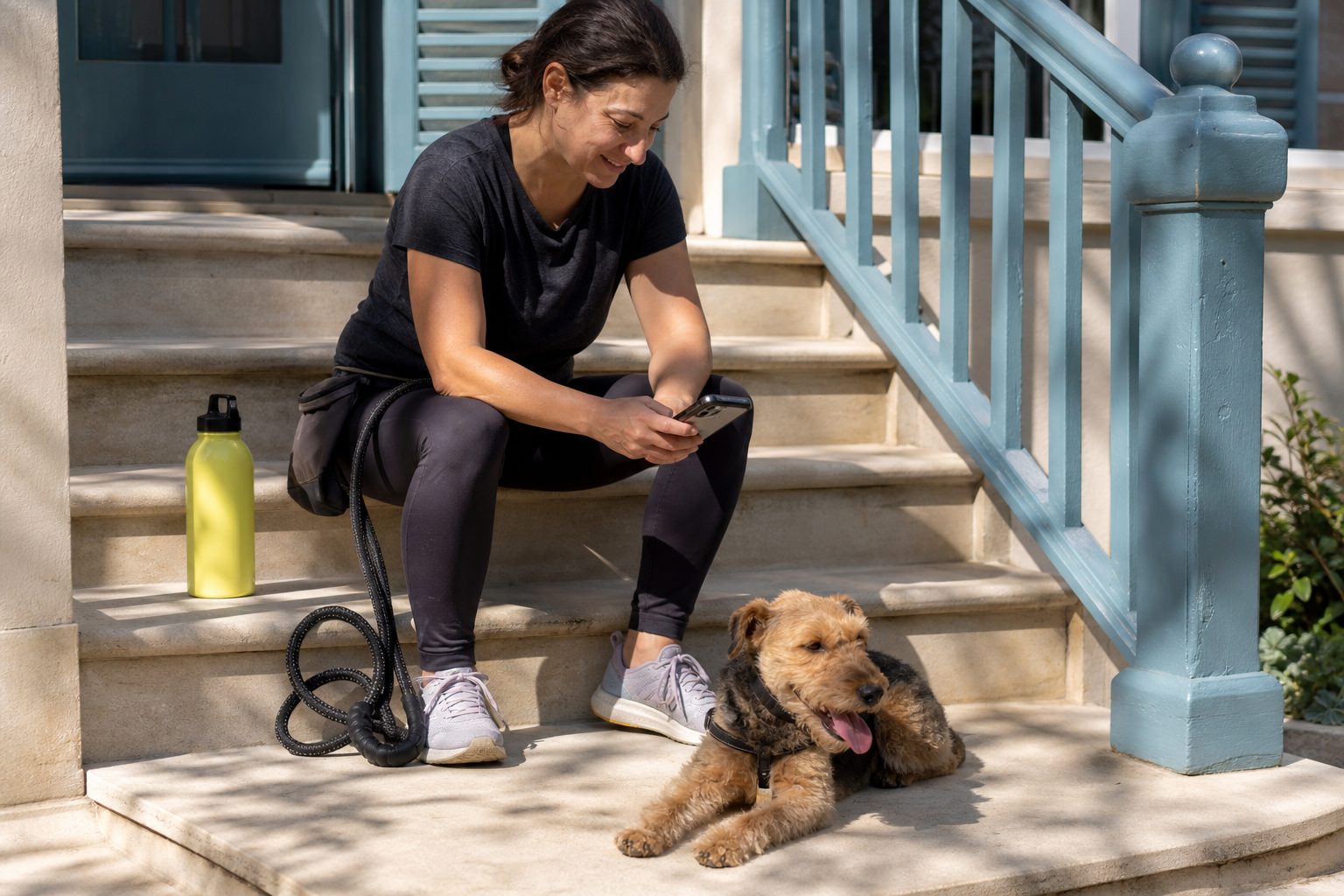
The safest policy is to keep the leash in hand at all times. If you must let go, secure the leash under your foot, loop it around your wrist, or tie it to a fixed object for a moment. Some walkers use waist belts or carabiner clips for added security during necessary stops.
Unexpected distractions
Distractions can come from anywhere: a barking dog across the street, a sudden downpour, or a dropped item. Plan ahead for quick stops, and avoid taking both hands off the leash unless the dog is fully secure. A split second is all it takes for a dog to make a break for it, especially if startled or focused on something exciting.
Off leash time in unfenced yards and the client who insists it is fine
Some clients ask walkers to let their dog off leash in an open yard or near the house, claiming the dog never runs away. Even with a trustworthy dog, a sudden noise, animal, or passing runner can trigger a chase instinct. Once a dog is loose in an unfenced area, the risk of loss or injury rises sharply.
Best practice is to decline all requests for off leash time outside fenced or fully enclosed areas. If a yard is not secure, keep the dog leashed or use a long line that allows freedom to roam but still gives control. Document client requests for off leash time, and be clear about company policy. Many walkers have lost clients by refusing, but the risk to the animal and the business is too great to chance it.
Invisible fences and temporary barriers
Invisible fences, garden gates, or temporary barriers may slow a dog, but they do not provide the same security as a solid fence. Dogs can become desensitized to invisible fence shocks or simply jump a low barrier if the motivation is high enough. Always treat any area that is not fully enclosed as off limits for off leash activity.
The first five minutes when a dog does get loose
No amount of planning can guarantee a dog never gets loose. When it happens, the first five minutes are critical. Do not chase, as this can trigger a flight response and drive the dog further away. Instead, call in a calm, happy voice and try to lure the dog back with treats or favorite toys. Kneeling down or sitting can make you less threatening and more inviting for a nervous or excited dog.
Enlist help quickly. Neighbors, passersby, or other walkers may spot the dog and direct it back to you. If the dog is running in a familiar area, block off exits and alert any nearby clients or staff. Always contact the owner immediately and start documenting where and when the dog was last seen, what it was wearing, and any identifying details.
After the incident: documentation and owner communication
After recovery, log every detail of the escape and the steps taken to retrieve the dog. This helps identify what went wrong and prevents repeat incidents. Notify the client as soon as possible, even if the dog is back safely. Transparency builds trust and allows everyone involved to learn from the mistake.
Tools that track walks with GPS, photo cards, and potty logs can help show exactly where and when the incident happened. Automatic delivery of walk reports keeps owners informed and reassured, even when things do not go as planned.